Every restaurant in New York City lives with the letter grade. Guests look for the blue A in the window before they walk in, and a B or C can cost a dining room business for months. Most of what goes into that grade happens in the kitchen, with food temperatures, pest control, and hand washing. Linen plays a smaller role, but it shows up in several places an inspector looks, and it is one of the easier areas to get right.
This post walks through where linen touches a NYC health inspection and how a linen rental service with scheduled pickup, cleaning, and delivery helps a restaurant stay on the right side of it.
How the NYC Letter Grade Works
The Health Department scores each inspection in points, and fewer is better. A score of 0 to 13 earns an A, 14 to 27 earns a B, and 28 or more earns a C. Each violation carries a point value based on how serious it is. Small items add up, which is why a restaurant can run a clean kitchen and still slip into B territory on a handful of avoidable citations.
Linen is one of those avoidable categories. The items below are where it tends to come up.
Where Linen Shows Up in an Inspection
Wiping Cloths
This is the big one. The NYC Health Code requires that wiping cloths be either clean and dry or kept in a sanitizing solution between uses. “Wiping cloths soiled or not stored in sanitizing solution” is a listed violation that inspectors cite regularly, and it carries points. A gray, damp towel hanging on an oven handle is exactly the kind of thing an inspector notices in the first thirty seconds.
A linen service helps here in two ways. It provides a steady supply of clean towels so staff never feel the need to stretch a dirty one through another shift, and it takes the soiled ones away on a schedule, so there is no pile of used towels sitting in a corner.
Staff Attire and Aprons
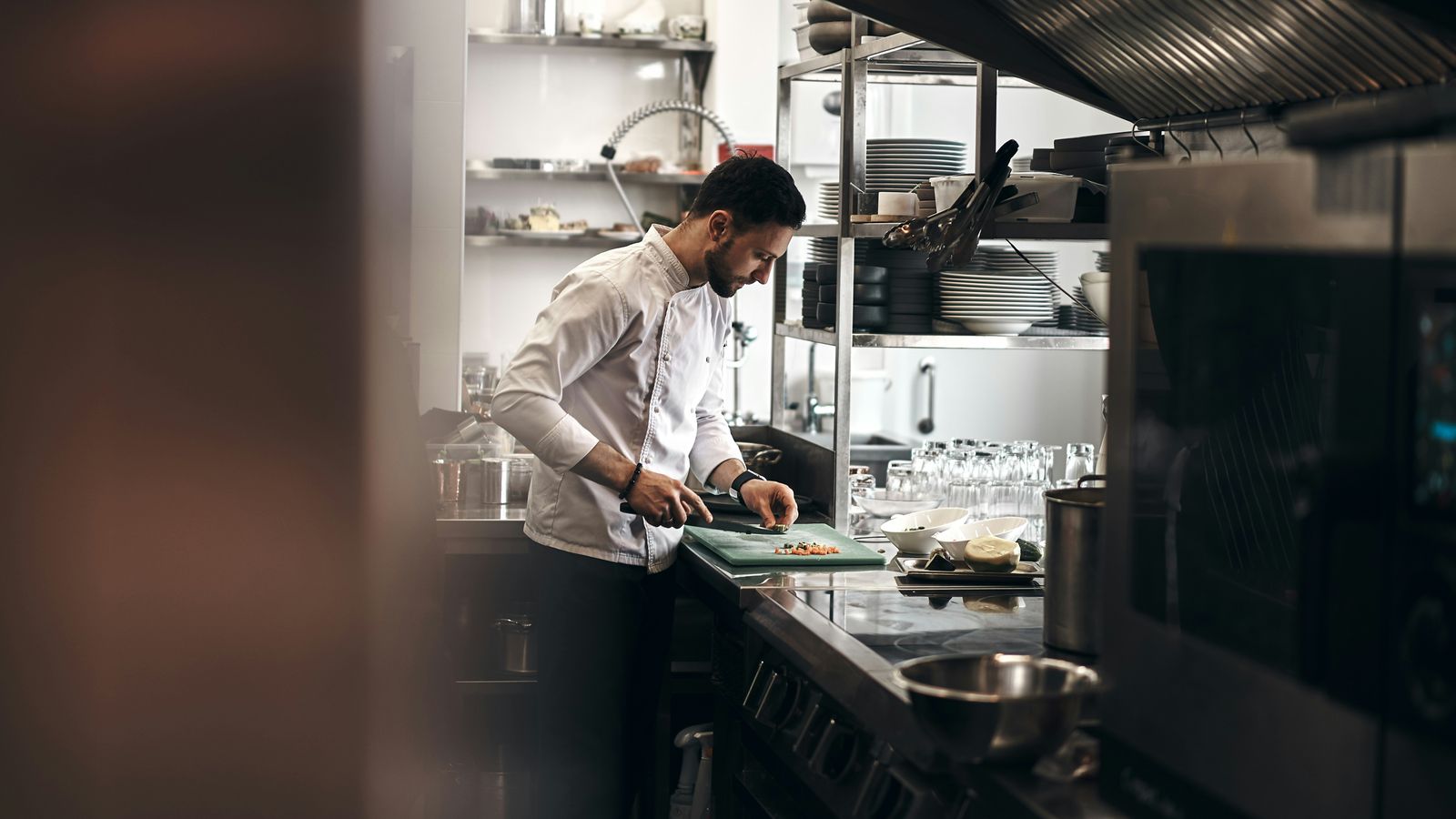
Inspectors look at whether food workers are wearing clean outer garments. A cook in a chef coat that has not been washed in days, or a server in an apron covered in last night’s service, can draw a citation for unclean attire. Asking staff to launder their own uniforms at home rarely produces consistent results, especially in a city where many employees do not have a washing machine in their apartment.
When chef coats and aprons are part of the linen rotation, every employee starts the shift in a professionally cleaned garment, and the dirty one goes into the hamper at close.
Storage of Clean and Soiled Linen
Clean linen needs to be stored in a way that keeps it clean, and soiled linen needs to be kept away from food and food contact surfaces. In a cramped Manhattan kitchen, these two piles can end up closer together than anyone intended. Common problems include:
Clean napkins stacked on an open shelf under a prep table where they catch splatter.
Soiled tablecloths left in an open bin near the dish station.
Bar towels stored in the same cabinet as cleaning chemicals.
Linen hampers without lids sitting in a walkway near the line.
A good provider delivers clean linen wrapped or bagged, supplies lidded hampers for soiled items, and picks up often enough that soiled linen never piles up.
General Cleanliness of the Dining Room
Inspectors do walk the front of house. Stained tablecloths and napkins do not carry the same point weight as a kitchen violation, but an inspector who sees a neglected dining room tends to look harder at everything else. Fresh table linen signals that the restaurant pays attention to detail.
What a Linen Rental Service Changes
The underlying issue with most linen-related citations is consistency. A restaurant can have clean towels on Monday and run out by Thursday. A scheduled linen rental service removes the variability by handling the cycle the same way every week:
Pickup on a fixed schedule. Soiled towels, aprons, chef coats, napkins, and tablecloths leave the building on the same day every week, or more often for high-volume kitchens.
Commercial laundering. Linen is washed at temperatures and with chemistry that a home washer or a small on-site machine cannot match, which matters for grease-soaked bar towels and kitchen rags.
Delivery of clean stock before you run out. Quantities are set to your usage, so the supply does not dwindle mid-week.
Replacement of worn items. Frayed, stained, or thinning linen is pulled from circulation by the provider, so staff are not working with towels that cannot be cleaned anymore.
A Few Habits That Help Between Deliveries
The service handles the heavy lifting, but a few simple practices inside the restaurant make the inspection picture even better:
Keep a labeled sanitizer bucket at each station and put wiping cloths in it between uses.
Set a rule that towels get swapped for clean ones at a fixed point in the shift, not when someone decides they look bad.
Keep hampers lidded and away from prep and plating areas.
Store clean linen off the floor and covered until it is needed.
Keep a spare apron or two near the pass for mid-shift spills.
Inspections Are Unannounced
The Health Department does not call ahead. An inspector can walk in during Saturday dinner rush or at 11 a.m. on a Tuesday. A restaurant that depends on someone remembering to run a load of towels is one forgotten load away from a citation. A restaurant on a weekly delivery schedule is in the same shape on inspection day as it is on any other day.
Best Metropolitan Linen provides scheduled pickup, cleaning, and delivery of towels, aprons, chef coats, napkins, and tablecloths for restaurants across the New York metropolitan area. If your linen program is not where you want it to be before the next inspection, reach out and we will put together a schedule and quantities that fit your kitchen.

By paul
Every restaurant in New York City lives with the letter grade. Guests look for the blue A in the window before they walk in, and a B or C can cost a dining room business for months. Most of what goes into that grade happens in the kitchen, with food temperatures, pest control, and hand washing. Linen plays a smaller role, but it shows up in several places an inspector looks, and it is one of the easier areas to get right.
This post walks through where linen touches a NYC health inspection and how a linen rental service with scheduled pickup, cleaning, and delivery helps a restaurant stay on the right side of it.
How the NYC Letter Grade Works
The Health Department scores each inspection in points, and fewer is better. A score of 0 to 13 earns an A, 14 to 27 earns a B, and 28 or more earns a C. Each violation carries a point value based on how serious it is. Small items add up, which is why a restaurant can run a clean kitchen and still slip into B territory on a handful of avoidable citations.
Linen is one of those avoidable categories. The items below are where it tends to come up.
Where Linen Shows Up in an Inspection
Wiping Cloths
This is the big one. The NYC Health Code requires that wiping cloths be either clean and dry or kept in a sanitizing solution between uses. “Wiping cloths soiled or not stored in sanitizing solution” is a listed violation that inspectors cite regularly, and it carries points. A gray, damp towel hanging on an oven handle is exactly the kind of thing an inspector notices in the first thirty seconds.
A linen service helps here in two ways. It provides a steady supply of clean towels so staff never feel the need to stretch a dirty one through another shift, and it takes the soiled ones away on a schedule, so there is no pile of used towels sitting in a corner.
Staff Attire and Aprons
Inspectors look at whether food workers are wearing clean outer garments. A cook in a chef coat that has not been washed in days, or a server in an apron covered in last night’s service, can draw a citation for unclean attire. Asking staff to launder their own uniforms at home rarely produces consistent results, especially in a city where many employees do not have a washing machine in their apartment.
When chef coats and aprons are part of the linen rotation, every employee starts the shift in a professionally cleaned garment, and the dirty one goes into the hamper at close.
Storage of Clean and Soiled Linen
Clean linen needs to be stored in a way that keeps it clean, and soiled linen needs to be kept away from food and food contact surfaces. In a cramped Manhattan kitchen, these two piles can end up closer together than anyone intended. Common problems include:
A good provider delivers clean linen wrapped or bagged, supplies lidded hampers for soiled items, and picks up often enough that soiled linen never piles up.
General Cleanliness of the Dining Room
Inspectors do walk the front of house. Stained tablecloths and napkins do not carry the same point weight as a kitchen violation, but an inspector who sees a neglected dining room tends to look harder at everything else. Fresh table linen signals that the restaurant pays attention to detail.
What a Linen Rental Service Changes
The underlying issue with most linen-related citations is consistency. A restaurant can have clean towels on Monday and run out by Thursday. A scheduled linen rental service removes the variability by handling the cycle the same way every week:
A Few Habits That Help Between Deliveries
The service handles the heavy lifting, but a few simple practices inside the restaurant make the inspection picture even better:
Inspections Are Unannounced
The Health Department does not call ahead. An inspector can walk in during Saturday dinner rush or at 11 a.m. on a Tuesday. A restaurant that depends on someone remembering to run a load of towels is one forgotten load away from a citation. A restaurant on a weekly delivery schedule is in the same shape on inspection day as it is on any other day.
Best Metropolitan Linen provides scheduled pickup, cleaning, and delivery of towels, aprons, chef coats, napkins, and tablecloths for restaurants across the New York metropolitan area. If your linen program is not where you want it to be before the next inspection, reach out and we will put together a schedule and quantities that fit your kitchen.