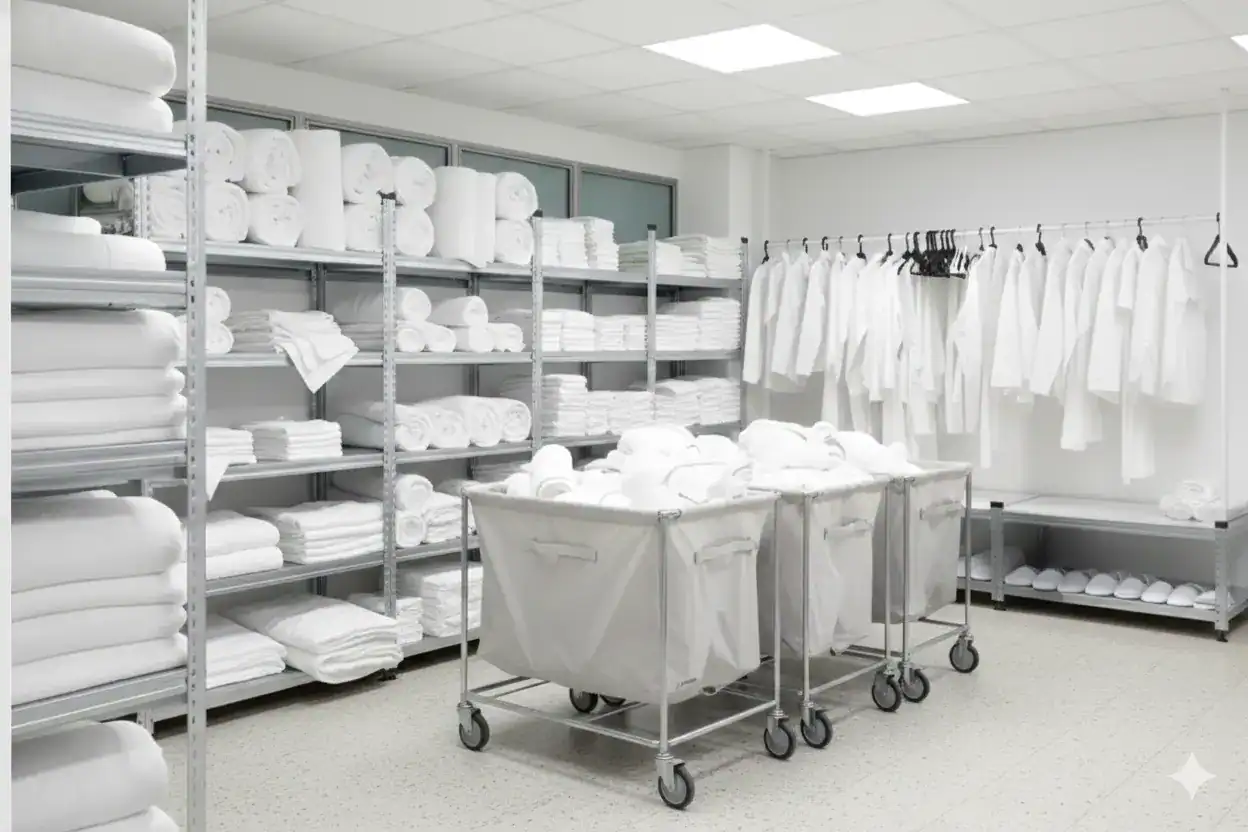
Choosing a commercial linen provider affects your restaurant’s appearance, operational efficiency, and bottom line. A poor choice means stained tablecloths, inconsistent deliveries, and hidden fees. A good choice means one less thing to worry about.
Here’s what separates reliable linen service companies from the rest.
Consistent Quality Control
Linens touch every guest. Stained napkins or rough towels reflect directly on your establishment.
Ask potential providers about their quality control process. How do they inspect items before delivery? What happens when something doesn’t meet standards?
Look for providers with documented inspection systems rather than vague promises. A multi-point quality control process—where items are checked at receiving, washing, finishing, and packing stages—catches problems before they reach your tables.
Reliable Delivery Schedules
Restaurants run on tight schedules. A linen delivery that arrives late on a Friday afternoon creates chaos.
Before signing any agreement, clarify:
Exact delivery days and time windows
Backup procedures if a delivery is missed
How far in advance you can adjust order quantities
Emergency delivery options for unexpected demand
Providers servicing your specific area regularly will have more reliable routes than those stretching their coverage thin. A company headquartered in your region with established routes through your borough or county typically offers better consistency than a national chain with a satellite operation.
Transparent Pricing Structure
Linen service contracts often contain fees that only appear on your invoice. Replacement charges, fuel surcharges, minimum order penalties, and price escalation clauses add up.
Request a complete fee schedule in writing. Ask specifically about:
Per-piece vs. flat-rate pricing
Charges for damaged or lost items
Minimum order requirements
Contract length and cancellation terms
Annual price increase caps
Some providers offer customized programs designed around your actual usage patterns and budget constraints. This approach typically costs less than forcing your operation into a standard package.
Inventory That Matches Your Needs
Your linen needs aren’t identical to the restaurant down the street. A steakhouse needs different tablecloth sizes than a bistro. A hotel restaurant has different napkin requirements than a catering operation.
Evaluate the provider’s inventory for:
Tablecloth sizes that fit your tables without excessive overhang or bunching
Color options that match your décor
Napkin fold compatibility
Specialty items like chef coats, aprons, or bar towels
Quality grades appropriate for your price point
Industry Experience and Stability
The commercial linen business has high operational complexity. Providers without deep experience often struggle with consistent quality, accurate billing, and reliable service.
Consider how long the company has operated. Family-owned businesses with decades of history have survived because they’ve built systems that work and relationships that last. Employee tenure matters too—a workforce with long-term staff means institutional knowledge and consistent service quality.
A company that’s been serving restaurants since the mid-20th century understands how the industry has evolved and what operators actually need.
Geographic Coverage and Local Knowledge
National providers offer broad coverage but often lack local expertise. Regional providers understand your market’s specific demands—health department requirements, seasonal fluctuations, and the operational realities of running a restaurant in your area.
For establishments in the New York metropolitan area, this means finding a provider familiar with the particular demands of NYC’s five boroughs, Long Island, Westchester, and the surrounding counties. Local providers can also respond faster when issues arise.
Responsiveness and Communication
Problems will occur. What matters is how quickly they get resolved.
Test responsiveness before signing a contract. Call with questions. See how long it takes to get a callback. Ask for references from current customers in your industry segment.
The best providers assign dedicated account representatives who know your operation and can solve problems without escalation.
Questions to Ask Before Signing
Use this checklist when evaluating providers:
What is your quality control process?
What geographic areas do you service regularly?
How long have you been in business?
What is your average employee tenure?
Can you provide a complete fee schedule?
What are your delivery day options for my location?
Do you offer customized programs or only standard packages?
What is your process for handling quality complaints?
Can you provide references from similar establishments?
Do you offer trial periods or introductory rates?
Making Your Decision
The cheapest option rarely provides the best value. A provider that costs slightly more but delivers consistent quality, reliable service, and transparent billing will save money over time through fewer operational headaches and better guest impressions.
Prioritize providers with documented quality systems, long operational history, and genuine expertise in your service area. The right linen partner becomes invisible—your linens simply appear on schedule, meet your standards, and let you focus on running your business.
Ready to compare your options? Contact Best Metropolitan Linen for a customized quote and ask about discount rates for first-time customers.

By paul
What to Look for in a Commercial Linen Provider
Choosing a commercial linen provider affects your restaurant’s appearance, operational efficiency, and bottom line. A poor choice means stained tablecloths, inconsistent deliveries, and hidden fees. A good choice means one less thing to worry about.
Here’s what separates reliable linen service companies from the rest.
Consistent Quality Control
Linens touch every guest. Stained napkins or rough towels reflect directly on your establishment.
Ask potential providers about their quality control process. How do they inspect items before delivery? What happens when something doesn’t meet standards?
Look for providers with documented inspection systems rather than vague promises. A multi-point quality control process—where items are checked at receiving, washing, finishing, and packing stages—catches problems before they reach your tables.
Reliable Delivery Schedules
Restaurants run on tight schedules. A linen delivery that arrives late on a Friday afternoon creates chaos.
Before signing any agreement, clarify:
Providers servicing your specific area regularly will have more reliable routes than those stretching their coverage thin. A company headquartered in your region with established routes through your borough or county typically offers better consistency than a national chain with a satellite operation.
Transparent Pricing Structure
Linen service contracts often contain fees that only appear on your invoice. Replacement charges, fuel surcharges, minimum order penalties, and price escalation clauses add up.
Request a complete fee schedule in writing. Ask specifically about:
Some providers offer customized programs designed around your actual usage patterns and budget constraints. This approach typically costs less than forcing your operation into a standard package.
Inventory That Matches Your Needs
Your linen needs aren’t identical to the restaurant down the street. A steakhouse needs different tablecloth sizes than a bistro. A hotel restaurant has different napkin requirements than a catering operation.
Evaluate the provider’s inventory for:
Industry Experience and Stability
The commercial linen business has high operational complexity. Providers without deep experience often struggle with consistent quality, accurate billing, and reliable service.
Consider how long the company has operated. Family-owned businesses with decades of history have survived because they’ve built systems that work and relationships that last. Employee tenure matters too—a workforce with long-term staff means institutional knowledge and consistent service quality.
A company that’s been serving restaurants since the mid-20th century understands how the industry has evolved and what operators actually need.
Geographic Coverage and Local Knowledge
National providers offer broad coverage but often lack local expertise. Regional providers understand your market’s specific demands—health department requirements, seasonal fluctuations, and the operational realities of running a restaurant in your area.
For establishments in the New York metropolitan area, this means finding a provider familiar with the particular demands of NYC’s five boroughs, Long Island, Westchester, and the surrounding counties. Local providers can also respond faster when issues arise.
Responsiveness and Communication
Problems will occur. What matters is how quickly they get resolved.
Test responsiveness before signing a contract. Call with questions. See how long it takes to get a callback. Ask for references from current customers in your industry segment.
The best providers assign dedicated account representatives who know your operation and can solve problems without escalation.
Questions to Ask Before Signing
Use this checklist when evaluating providers:
Making Your Decision
The cheapest option rarely provides the best value. A provider that costs slightly more but delivers consistent quality, reliable service, and transparent billing will save money over time through fewer operational headaches and better guest impressions.
Prioritize providers with documented quality systems, long operational history, and genuine expertise in your service area. The right linen partner becomes invisible—your linens simply appear on schedule, meet your standards, and let you focus on running your business.
Ready to compare your options? Contact Best Metropolitan Linen for a customized quote and ask about discount rates for first-time customers.